


Polished vs Honed vs Antique Marble Finishes: Which One Goes Where?

Short answer: A polished marble finish is glossy and mirror-like and shows color and veining at their most intense; it is ideal for wall cladding, bathroom vanities and interior floors that stay dry. A honed finish is matte, hides etching and scratches better and offers more grip when wet, which makes it the practical choice for kitchen countertops, high-traffic floors and bathroom floors. An antique finish (tumbled, brushed or leathered) adds texture and a rustic, aged character and works best in showers, pool surrounds, outdoor areas and Mediterranean-style projects.
Two slabs cut from the same marble block can look and perform very differently simply because of their surface finish. This guide covers the three main finish families, from how they are produced to slip resistance, maintenance and where each one belongs.
What is a marble surface finish?
After quarrying, blocks are sawn into slabs with gang saws or block cutters. At this stage the slab surface still carries saw marks. The surface finish is the process that turns this raw face into its final look through grinding, polishing, brushing or tumbling.
One key point: a finish does not change the stone's chemistry. Marble is mostly calcium carbonate (calcite or dolomite). Whether polished or honed, it can etch when it comes into contact with acids such as lemon juice, vinegar, wine or tomato. The finish decides how visible that etch mark is, how slippery the stone is and how quickly it absorbs liquids.
Polished marble
How it is made
A polished finish is achieved by grinding the slab with a sequence of progressively finer abrasives and then buffing it with polishing heads. The shine does not come from a coating; it comes from the mechanically smoothed stone itself. This is why a marble that takes a good polish can be professionally re-polished years later.

Look and advantages
Deepest color and sharpest veining: The character of Calacatta, Statuario or black marbles is strongest on a polished surface.
Light reflection: Spaces look brighter and larger, which makes polished stone a classic for lobbies, entrances and feature walls.
Tighter surface: A polished face absorbs liquids more slowly than a honed one, giving you a little more time to wipe up spills.
Easy to wipe: Dust and dirt do not cling to the smooth surface.
Disadvantages
Etching is very visible: Dull spots stand out immediately against the gloss.
Scratches and wear show: On busy floors, walking paths gradually lose their shine.
Slippery when wet: According to commonly cited US stone industry data, mirror-polished marble and granite floors typically measure wet DCOF values of about 0.20 to 0.36, while the ANSI A326.3 reference value for level interior floors that get wet is 0.42.

Where to use polished marble
Wall cladding, fireplace surrounds and bookmatched feature panels
Bathroom vanity tops and decorative surfaces
Interior floors that stay dry: living rooms, bedrooms, hotel lobbies
Furniture, tables and decorative objects
Honed marble
How it is made
Honing means stopping the grinding process at a set grit before the polishing stage. Depending on where the process stops, the result ranges from a fully matte surface to a soft satin sheen.

Look and advantages
Natural, calm appearance: Colors look about one shade lighter than polished, and veining is softer. Honed marble is a favorite for modern, minimalist and "quiet luxury" interiors.
Hides etching and scratches: An etch mark is a dull spot, so it blends into an already matte surface. That is why honed marble looks less worn in busy kitchens.
Better grip: Honed marble performs noticeably better than polished on wet floors. The same sources report wet DCOF values for honed marble of roughly 0.38 to 0.52, depending on the stone and the degree of honing. In other words, honing does not automatically meet the standard for every stone, so always ask for test data for wet areas.
No glare: Comfortable in spaces with strong daylight.
Disadvantages
Absorbs more: The surface is more open at a microscopic level, so sealing against oil, coffee and wine stains matters even more.
Shows handling marks: Fingerprints and grease marks can show, especially on dark honed stones.

Where to use honed marble
Kitchen countertops and islands, especially in kitchens that are cooked in every day
Bathroom floors and wet rooms
Stair treads, corridors and high-traffic floors
Hotels, offices and retail spaces
Floors in homes with children or elderly residents

Antique marble finishes (tumbled, brushed, leathered)
"Antique" or "aged" is an umbrella term for finishes that give marble a textured, naturally worn look. Several different techniques fall under this heading:
Tumbled marble
Usually small-format tiles are placed in rotating or vibrating drums together with abrasive media. Edges and corners become rounded and the surface looks softly worn, as if it had been in place for centuries. Tumbling is mostly applied to small formats; it is common for mosaics, wall tiles and floor tiles.

Brushed (antique) finish
The surface is worked with abrasive brushes that wear away the softer parts of the stone and leave the harder parts standing, creating a gently undulating surface you can feel. Unlike tumbling, brushing can be applied to full slabs and keeps straight edges. It is suitable indoors and outdoors, on floors and walls.
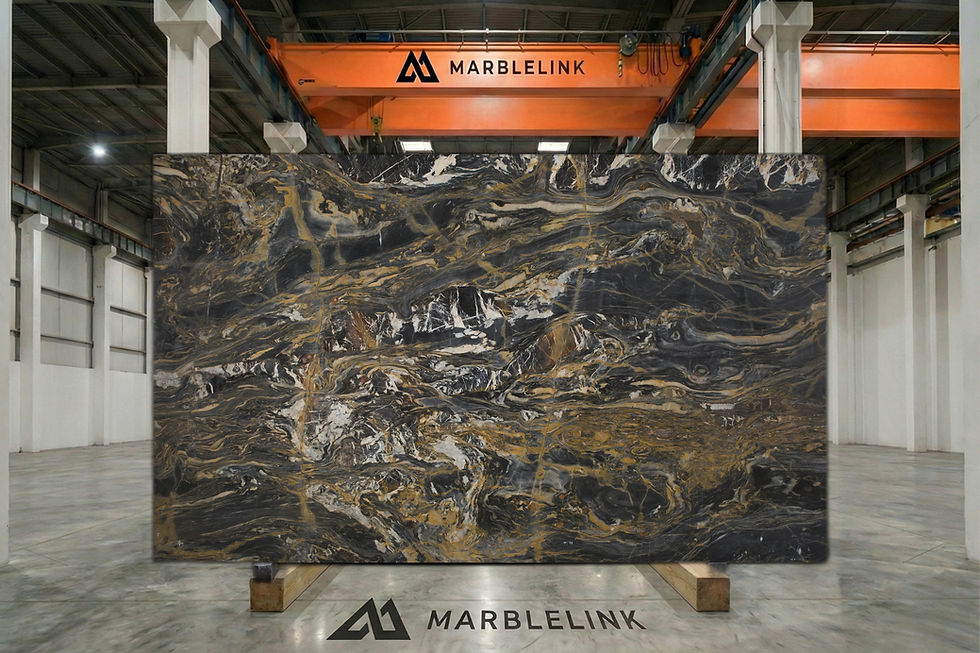
Leathered finish
A leathered finish is a softer, silkier version of brushing applied to slabs. It gives a slight satin sheen and a tactile surface, and it hides fingerprints and water spots far better than polished stone. It is most common on granite and quartzite but is also applied to suitable marbles.


A note on acid washing
Some producers create an antique look by washing the surface with acidic compounds. This can improve slip resistance, but it makes cleaning and maintenance harder, and because of the chemical reaction involved it is generally not a recommended method. Mechanical ageing (tumbling, brushing) usually gives a more controlled result.
Pros and cons of antique finishes
Slip resistance: The textured surface gives better grip on wet floors than polished or honed marble, which makes it a strong choice for shower floors and pool surrounds.
Hides wear: Scratches, etching and wear are hard to spot on a surface that already looks aged.
Character: Adds natural warmth to Mediterranean, rustic, boutique hotel and heritage restoration projects.
Cleaning: Texture can hold dirt and residue, so regular cleaning and sealing are needed.
Color: Ageing softens colors toward a more pastel look.
Wet vs dry: why does the color change?
Matte and textured finishes darken noticeably when wet and the colors deepen; they return to lighter tones when dry. The two photos below show the same honed-and-tumbled Sunny White surface dry and wet. If you want the wet look permanently, color-enhancing sealers can partly achieve it; always test on a small sample first.


Comparison table: polished vs honed vs antique marble
Feature | Polished | Honed | Antique |
Look | Mirror gloss | Matte or satin | Textured, aged |
Color and veining | Most intense | One shade lighter | Soft, pastel |
Wet slip resistance | Low | Medium | High |
Etch visibility | Very visible | Less visible | Barely visible |
Scratch visibility | Visible | Low | Very low |
Stain absorption | Lower | Higher | High |
Cleaning | Very easy | Easy | More effort |
Typical use | Walls, lobbies, vanities | Kitchens, stairs, bath floors | Showers, pools, outdoors |
Which finish for which space?
Kitchen countertop: Honed or leathered for an active kitchen. If you love a polished countertop, accept that etch marks will appear and use it with care.
Bathroom vanity: Polished or honed; both work. Sealing matters against cosmetics and toothpaste stains.
Bathroom floor and shower tray: Honed or antique. In showers, small textured tiles with grout lines improve traction.
Living room and entrance floors: Polished where floors stay dry; honed where traffic is heavy or there are pets.
Stairs: Honed or brushed. Consider extra anti-slip detailing on stair nosings.
Wall cladding and bookmatched panels: Polished. Slip resistance is not an issue on walls, so show the veining at its strongest.
Pool surrounds and outdoor paving: Antique, brushed or coarser textured finishes. Polished marble should not be used for outdoor floors.
Hotel lobbies and commercial projects: Polished walls with honed floors deliver both prestige and safety.
Slip resistance: which standards matter?
In Europe, the slip resistance of natural stone flooring is measured with a pendulum tester under EN 14231, and dry and wet values can be declared in the CE marking. In the US, a wet DCOF of 0.42 under ANSI A326.3 is the common reference for level interior floors that get wet.
Three things to keep in mind:
Slip values must be tested for the stone and finish together. A value measured on a flamed surface does not apply to the same stone honed.
The same finish behaves differently on different stones. Research has shown that slip resistance on honed surfaces correlates strongly with the stone's porosity and mineral content.
Over time, wear, dirt build-up and the wrong cleaning products can make even a compliant floor slippery.
Maintenance basics for every finish
Use pH-neutral cleaners. Limescale removers, vinegar and lemon-based products etch every finish.
Seal regularly. Sealers reduce staining but do not prevent etching. Frequency depends on the stone's porosity; for countertops, every 6 to 12 months is a common recommendation. Quick check: put a few drops of water on the surface; if it darkens within a few minutes, it is time to reseal.
Do not confuse stains with etching. A stain is liquid that has soaked into the stone and can often be drawn out with a poultice. An etch is chemical damage to the surface and needs re-honing or re-polishing.
Finishes can be restored. A dulled polished surface can be re-ground and re-polished, a honed surface can be re-honed, and a polished floor can even be converted to honed later.
Choosing a finish with MarbleLink
The right finish matters as much as the stone itself. We can help you decide which finish to use on the same stone in different areas of your project. For a closer look at one of Turkey's best-known marbles, read our Diana Royal Marble guide; for the bigger picture, see Turkish Marble: A Complete Guide.
Before you decide, always ask for a sample and look at it both dry and wet, under the lighting of the space where it will be installed.
Frequently asked questions
Is honed or polished marble better?
It depends on where it goes. In areas that get wet or see heavy use (kitchen countertops, bathroom floors, stairs), honed marble is more practical. On walls, in lobbies and on dry floors, polished marble shows color and veining best.
Is polished marble slippery?
It is usually fine when dry, but wet polished marble is slippery. Honed or antique finishes are recommended for bathroom floors, showers, entrances and outdoor areas.
Does honed marble stain more easily?
A honed surface absorbs liquids faster than a polished one. Regular sealing greatly reduces the risk, and wiping spills immediately is the most effective protection.
Is tumbled marble the same as antique marble?
Tumbling is one way of ageing marble. "Antique" is an umbrella term that covers tumbled, brushed, leathered and acid-washed finishes. Tumbling is mostly used for small tiles, while brushing can also be applied to full slabs.
Can polished marble be honed later?
Yes. A polished surface can be honed to a matte finish with professional grinding machines, and a honed surface can be polished with further grinding and buffing. Turning a textured antique finish back into a flat polished surface requires removing much more material.
Which marble finish is best for kitchen countertops?
For kitchens in daily use, honed or leathered finishes look less worn because etching is less visible. If you choose a polished countertop, wipe up acidic spills such as lemon juice, vinegar and wine right away.


Comments